How to be a good ally at the University – Join us at equality and diversity events
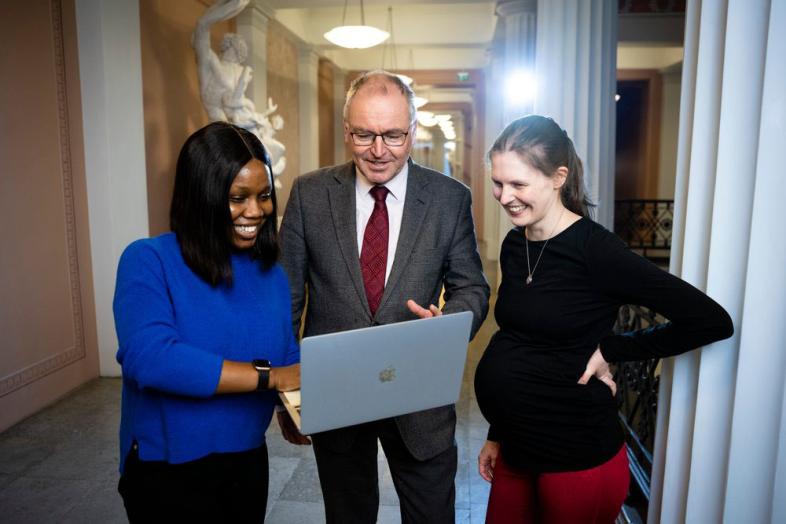
An ally is a person who is committed to taking action against discrimination both in everyday life and structurally, even if they do not belong to the minority group facing discrimination.
Allyship helps us create an increasingly equal learning and work environment where everyone has the opportunity to conduct research, study and participate as themselves.
“This year, we wanted to emphasise allyship, as the University is a diverse community where different backgrounds, languages, cultures and personal circumstances meet. Allyship is a way of ensuring that diversity is not limited to speeches, but manifests in everyday action,” says Yacine Kalke, a specialist in social responsibility.
She points out that allyship does not require flawless action, but the willingness to learn, listen and act even in uncomfortable situations.
Small steps towards everyday allyship
Each member of the University community can develop into a better ally for minority groups, for example, by critically considering their own status and responsibilities, and the structures that shape our interaction. Allyship can be demonstrated, for example, in teaching, guidance and supervision, research groups, recruitment and student events.
“Allyship doesn’t mean major public statements, but often small actions: intervening in inappropriate speech, giving the floor to quieter voices and critically examining your own practices,” says Vice-Rector Hanna Snellman.
Join us at equality and diversity events in the spring
The allyship theme is evident in this year’s equality and diversity events, where we highlight good allies and share tips on how everyone can be a better ally. The events and training sessions are open to all members of the University community.
- Minna Canth equality day event, 19 March 2026
- Implicit Biases training, 21 April 2026 from 9.00 to 11.00
- An afternoon session on job satisfaction, May 2026
- Pride Week, June 2026
Read more about the events on Flamma.
How to be a better ally for minority groups
- Listen. Give members of minority groups the opportunity to tell their own stories. Boost their voices.
- Find out for yourself. You will never become the perfect ally. Do not assume that minority group members will explain matters to you.
- Recognise your privileges. As a member of the majority, it is easy to overlook discrimination, as it does not affect you.
- When organising events, establish safer spaces. A psychologically safe community allows mistakes without fear of embarrassment or belittling. Make sure that events, materials and communications are as accessible as possible.
- Consider the language you use: Is it gender sensitive and accessible to international members as well?
- Learn from your mistakes and do your own emotional labour arising from them. Be prepared to critically examine your actions.
- Always intervene in discrimination, both explicit and structural. For example, do not leave members of minority groups on their own to fight discriminatory speech or disrespect in teaching, research groups or meetings.
- If you serve as an administrative or academic supervisor, critically examine your selection criteria and mechanisms of preference.
The tips have been adapted from an online course on anti-racism by the Finnish Institute for Health and Welfare.
Picture: Veikko Somerpuro (University of Helsinki)